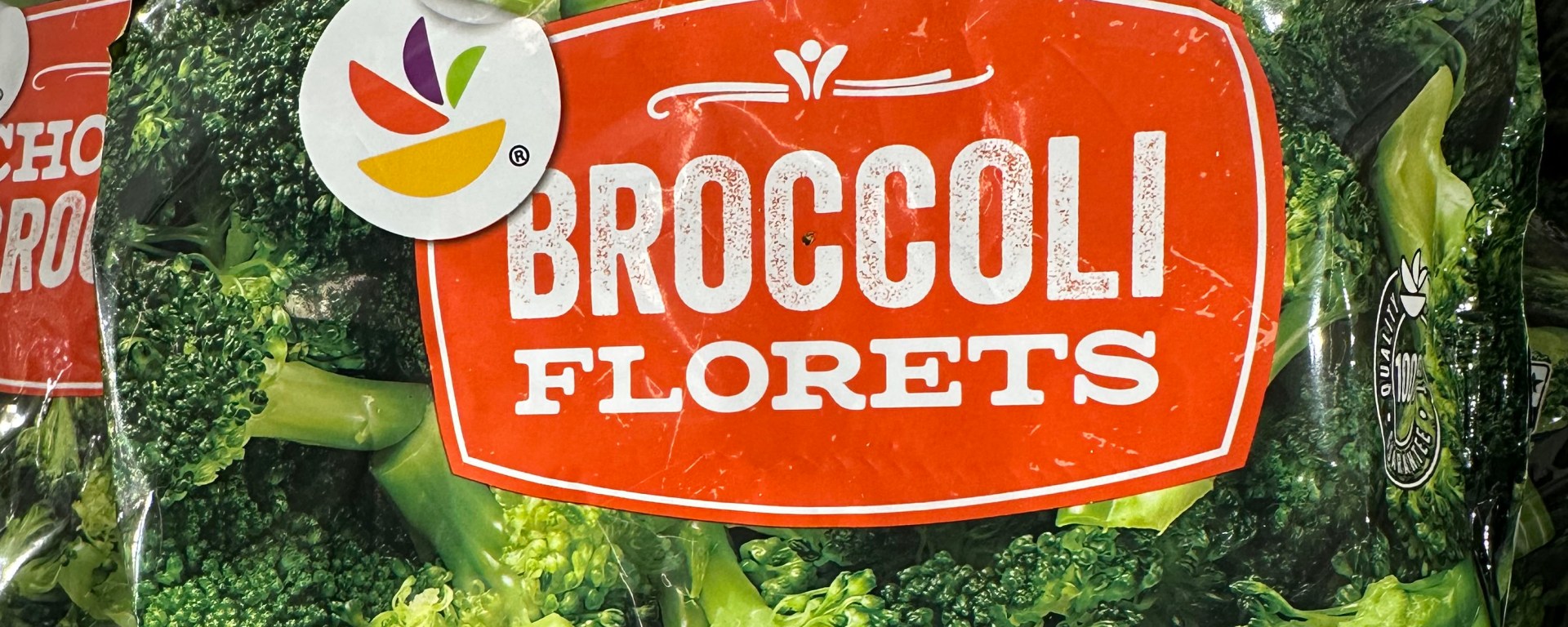
There’s a moment in the produce aisle that I dread. Not the crowded Saturday morning chaos of HMart, Whole Foods, or Stop & Shop, not the misting system that soaks my sleeves and brings on a Raynaud’s attack, not even the suspiciously perfect waxed apple that’s been there since last Tuesday. No, what really gets to me lately is picking up a sealed plastic bag or box of bell peppers, green beans, mushrooms, or Brussels sprouts and knowing, with the weary certainty of someone who has cooked professionally for a very long time, that I cannot trust any of them.
And yet, into the cart it goes anyway, because sometimes that’s all there is. Why, oh why, can’t I pick my own produce?
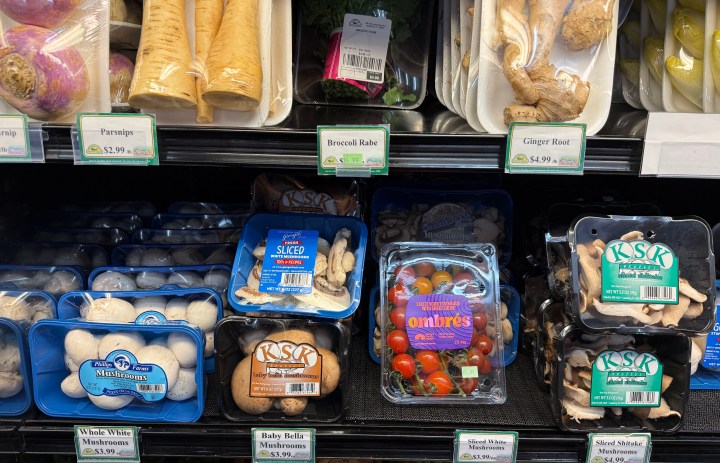
Here’s the thing about buying produce loose: You become the editor. You pick up each tomato, press it gently, smell the stem end, and hold it to the light if you’re feeling theatrical about it. You’re making decisions. You’re rejecting the ones with soft spots, the ones that smell like nothing, the ones that peaked three days ago on a truck somewhere in New Jersey. You leave those behind for someone else to discover, or, more likely, for the compost bin. This is your right as a cook, even though you might be pissing off the produce manager as they shoot you a dirty look. This is, frankly, the whole point.
Sealed plastic bags and boxes take that joy away entirely. You get what you get, and that’s it! That bag of green beans? You won’t know until you’re home that at least one third are already soft with whispers of mold on both ends. That clamshell of super-sweet cherry tomatoes costing $6.99? Fine on top, mealy on the bottom. That bag of pre-washed spinach may look perky in the store, but by tomorrow it’ll smell faintly of regret and dirty socks. I’ve been there. Many, many times. And I don’t want to return, but I must.
And what frustrates me most isn’t just the disappointment of it all, it’s the blindness of it. I can’t smell through plastic. I can’t feel for give or firmness. I’m shopping by appearance alone, which is essentially the least reliable way to assess produce freshness. It’s like judging a book by its shrink-wrapped cover.
So why do supermarkets do it? I’ve spent enough time in test kitchens and behind-the-scenes at food operations to have some genuine sympathy for the other side of this argument — even if it doesn’t make me any less annoyed at the checkout counter.
The case for the bag or box — and it’s not entirely without merit.
Sealed packaging extends shelf life, sometimes significantly. Modified atmosphere packaging, the kind used in those spinach clamshells and pre-washed salad bags, controls the ratios of oxygen, carbon dioxide, and nitrogen inside, which slows the respiration of the produce and delays spoilage. For a supermarket managing inventory across hundreds of SKUs, that’s not a small thing. Less spoilage means less waste, and less waste can mean lower costs that theoretically get passed to the consumer. Theoretically.
Packaging also offers portion control and convenience, which matters to a certain kind of shopper. A busy household that wants exactly one cup of sliced mushrooms, pre-washed and ready to go, is not wrong to want that. I may not be that shopper, but I understand them.
And then there’s hygiene. Pre-packaged produce has less handling — fewer hands touching it between farm and your kitchen — which is a real consideration, especially post-pandemic. The bag, for better or worse, creates a kind of protective custody.
Supermarkets also point to data: Packaged produce sells faster, with fewer customer complaints about damaged goods. When produce is loose, and someone squeezes too hard, bruises too many peaches, or sneezes on the parsley, the store absorbs that loss. The bag protects against a certain category of human error that, frankly, I’ve witnessed plenty of.
The case against — and it’s substantial.
But here’s what the bag does to the cook, and to the food. It commodifies produce. It removes all sensory engagement from the shopping experience and replaces it with a best-by date that nobody fully believes. It suggests that all peppers are equal, that all garlic is the same, that freshness can be inferred from a label rather than from the garlic’s weight in your palm and the papery snap of its skin.
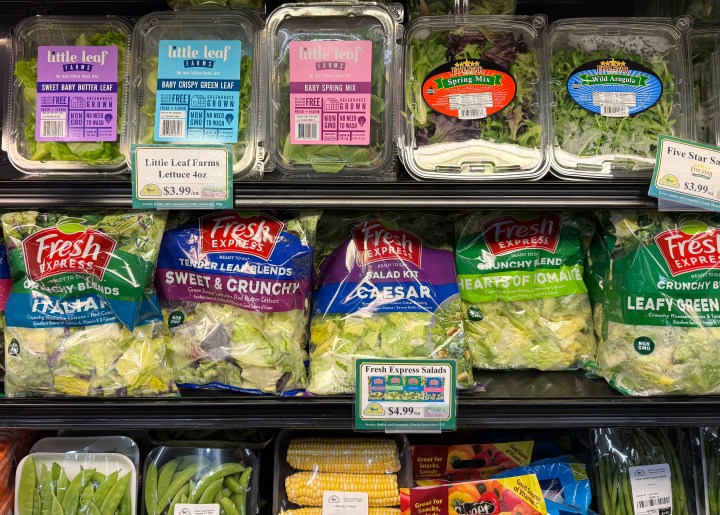
It also, and this is the part that quietly infuriates me, creates a different kind of waste. The plastic itself — clamshells, zipper bags, twist ties, netting — adds up to an enormous amount of packaging that the produce never asked for and the planet doesn’t need. The irony of buying a head of broccoli sealed in plastic to reduce food waste isn’t lost on me.
And sealed bags and boxes can hide sins. A single bruised strawberry pressed against the clamshell bottom. A clove of garlic that’s already sprouted beneath the others. The moisture that’s begun to collect at the lowest point of the spinach bag. These things reveal themselves only after purchase, only after you’re home.
I don’t think the sealed bag is going away. The economics favor it, the logistics demand it, and enough consumers have accepted it as the price of convenience that the industry has no particular incentive to change. Farmers’ markets remain my preferred antidote. The place where you can still smell a cantaloupe, ask the farmer when it was picked, and exercise the cook’s most essential skill: Judgment.
But on the days when the farmers market is closed, and my recipe won’t wait, I stand in the produce aisle with my plastic bag of Brussels sprouts, hold it up to the light, squint at the ones near the bottom, and make my peace with uncertainty.
It’s not ideal. But then, neither is dinner without green beans.
—Chef Diana
What do you think — loose produce or packaged? Tell me in the comments.
 Chef Diana Andrews
I’m with you when it comes to berries but I’ll politely dissent on spinach and arugula. If they were loose in a bin I’d have to bag them anyway to check out and store them in my ‘fridge.
LikeLiked by 1 person
Reading this reminded me of what a great writer you are. “That bag of pre-washed spinach may look perky in the store, but by tomorrow it’ll smell faintly of regret and dirty socks.” Perky, regret?!? There are just so many examples I could call on. Your pacing, your turn of a phrase, it all just works so well. It almost reads like a stand up comedy routine, like the ones that are funny and have something to say about our world.
And I’m with you all the way on packaged food, you can’t live with it and you can’t live without it.
LikeLiked by 1 person