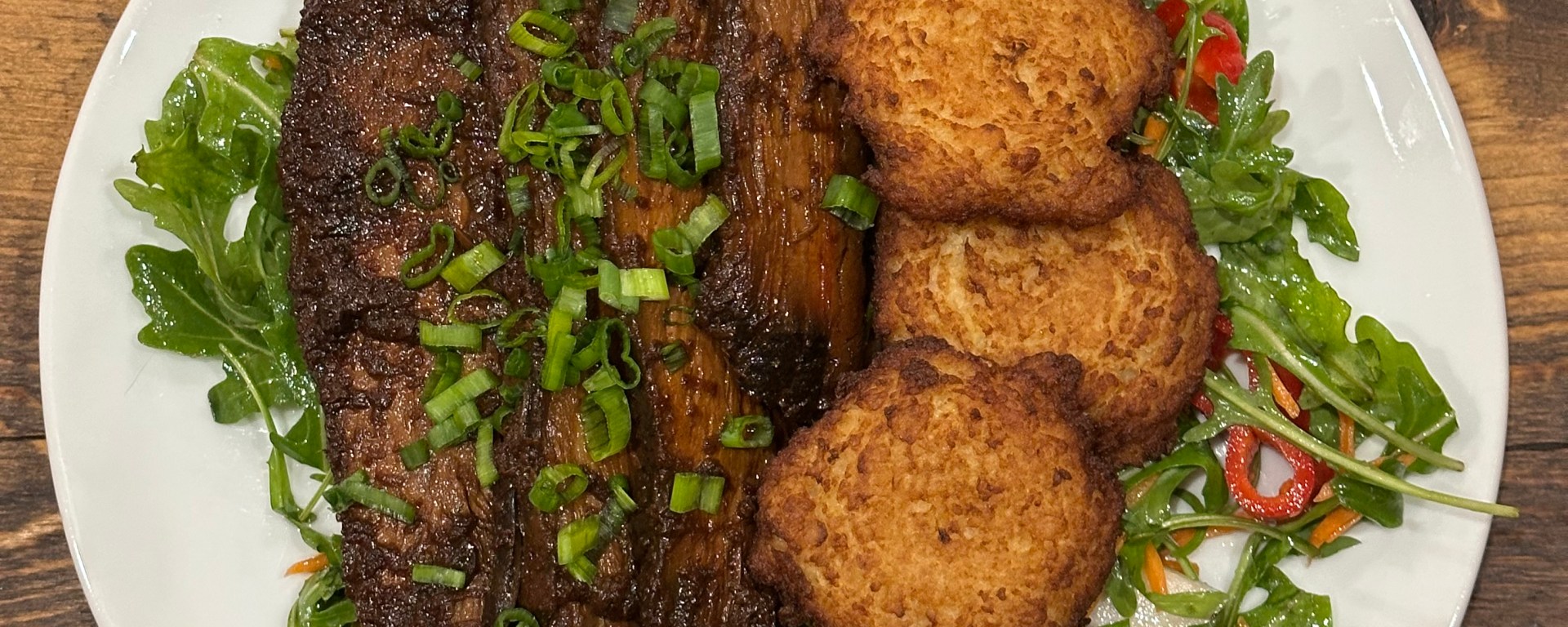
This all started, as many good food conversations do, with a complaint about holiday cooking.
A friend was lamenting about her annual Hanukkah brisket struggle. “It takes forever,” she said, “And no matter what I do, it’s dry”. What she wanted was simple: A mostly hands-off recipe with minimal prep that delivers a tender, juicy brisket.
That’s when I thought: Why not ask AI?
I’ve spent my career testing recipes the old-fashioned way—reading, researching, cooking, adjusting, and retesting. But this felt like a perfect opportunity, since everyone’s talking about it, and because it’s virtually everywhere, to put artificial intelligence to work in a very human space: My kitchen.
So I asked AI to create a slow-cooker brisket inspired by my favorite Kalbi flavors—soy sauce, garlic, ginger, a touch of sweetness, with that unmistakable Korean BBQ depth. I promised myself I’d follow the recipe exactly as written. No tweaks. No instincts kicking in to “fix” things. On paper, it sounded promising: Familiar ingredients, cozy flavors, minimal prep, long, slow cooking.
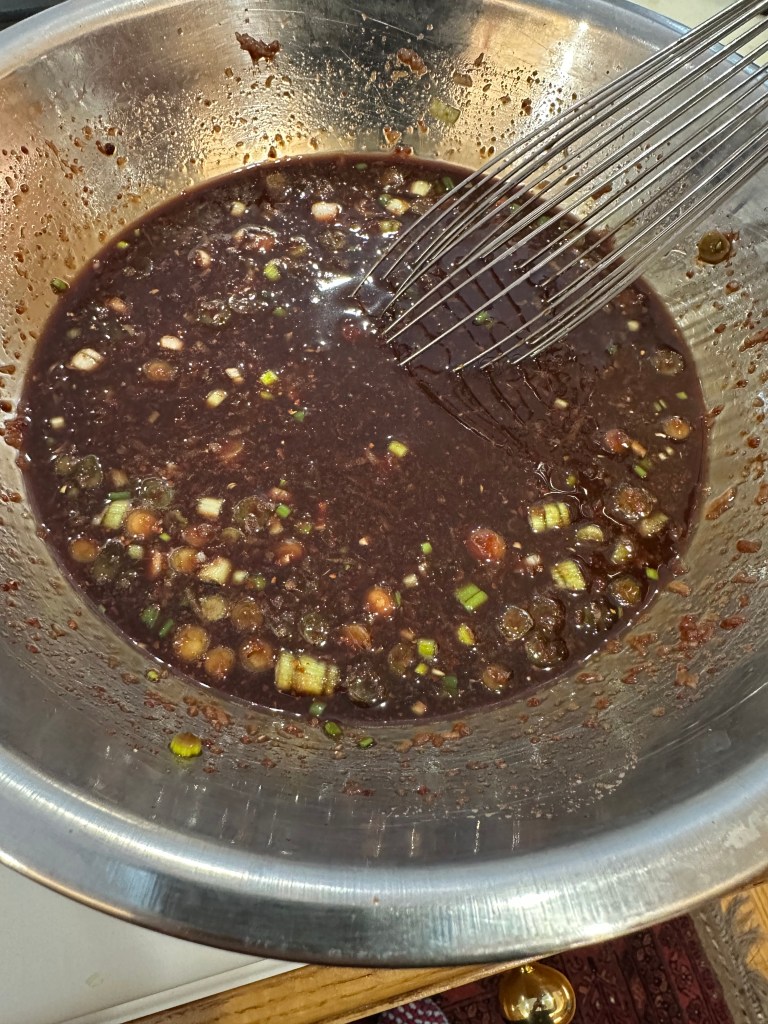
I did exactly what the recipe said. And then I waited.
Nine hours later, I lifted the slow cooker lid with real optimism. The brisket looked dark and glossy, bathed in sauce. The house smelled intensely aromatic, with the scent of soy sauce and garlic filling every corner, almost too savory. That was my first clue.
The verdict? Not great.
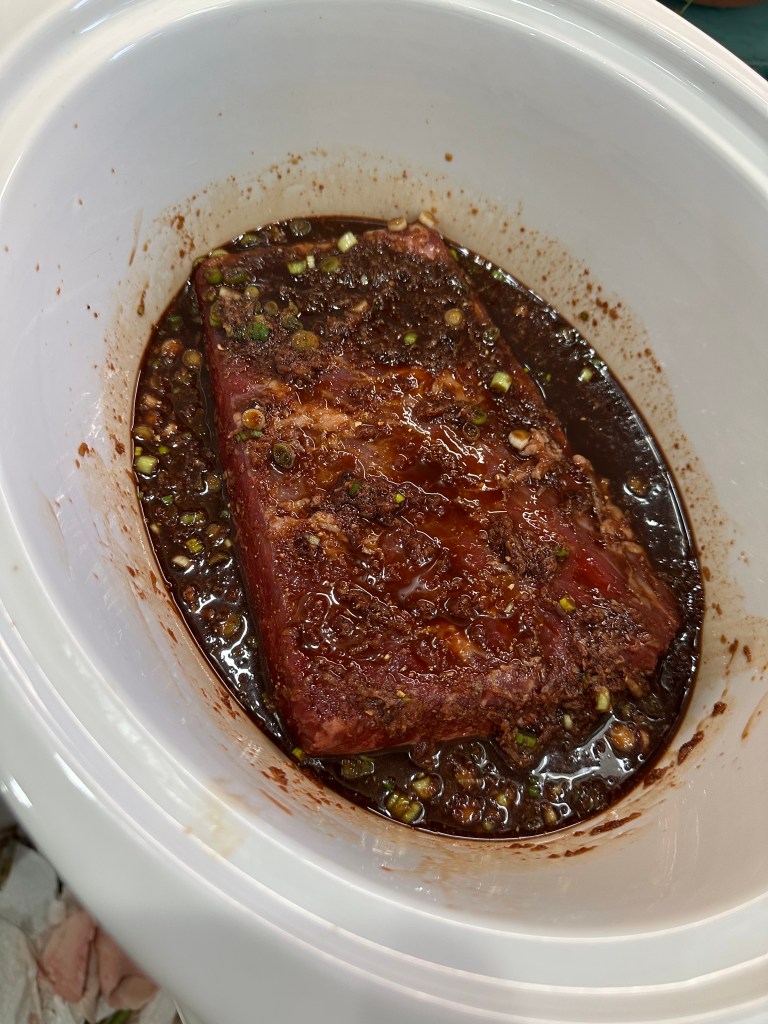
The meat was tough and surprisingly dry, despite swimming in liquid. The sauce was aggressively salty, with a coating that lacquered my tongue and wouldn’t let go. Instead of a brisket that OBEYS, yielding that buttery, pull-apart tenderness I was hoping for, this brisket fought back, as if it had a will of its own. Every bite was a reminder that long cooking doesn’t guarantee tenderness—and that salt, especially soy sauce, behaves very differently in a slow cooker than it does on a grill or in a braise you’re actively managing.
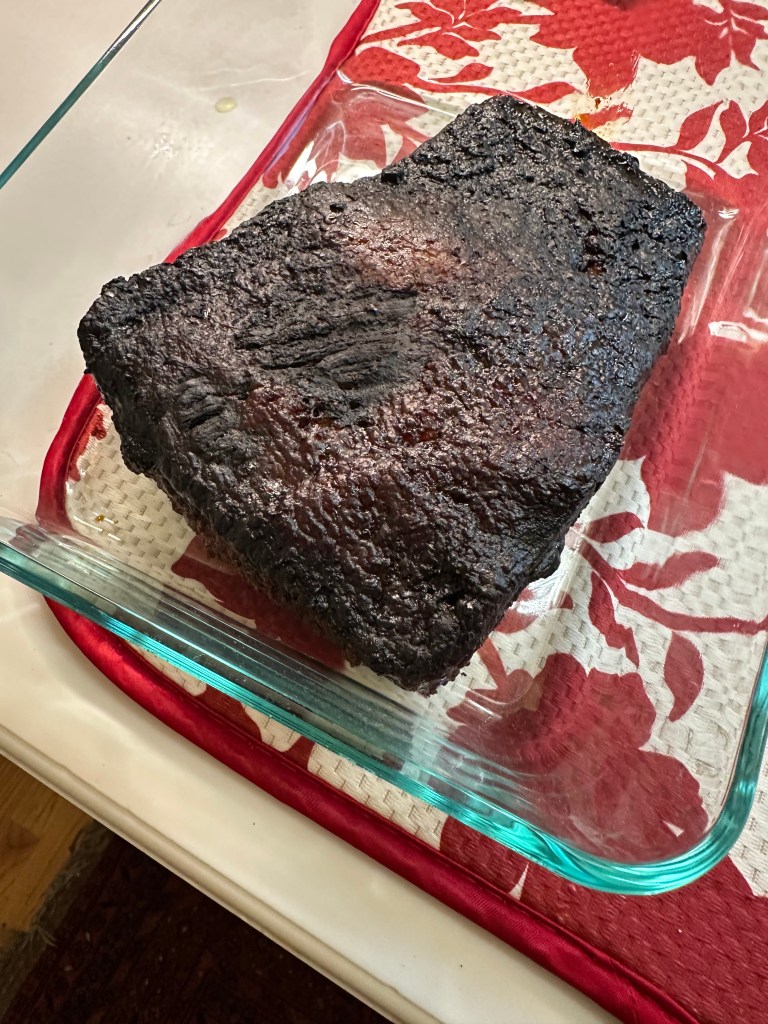
This wasn’t a near miss. It was a clear failure. And honestly? I was relieved.
Because what this little experiment reinforced is something every experienced home cook already knows, even if we don’t always articulate it: Recipes are more than ingredient lists and cooking times. They’re judgment calls. They’re context with an understanding of how heat works, how proteins behave, and how flavors concentrate over time.
Kalbi-style marinades are bold, sassy, salty, a tiny bit sweet, and balanced by a hard char, best when cooked over high heat. Stretch that same formula over nine hours in a sealed environment, and suddenly everything intensifies in the wrong direction. AI didn’t know that. It couldn’t taste that. It didn’t question whether brisket—the cut, the thickness, the grain—was suited to the method as written.
That’s not a swipe at AI, but a reminder that the sentient Mr. Data from Star Trek won’t be tying on an apron in your kitchen any time soon. And I’ll say it here and now: AI can generate ideas. It can spark creativity. It can even give you a starting point. But it doesn’t replace the quiet, learned instincts that come from years of cooking and thinking about cooking.
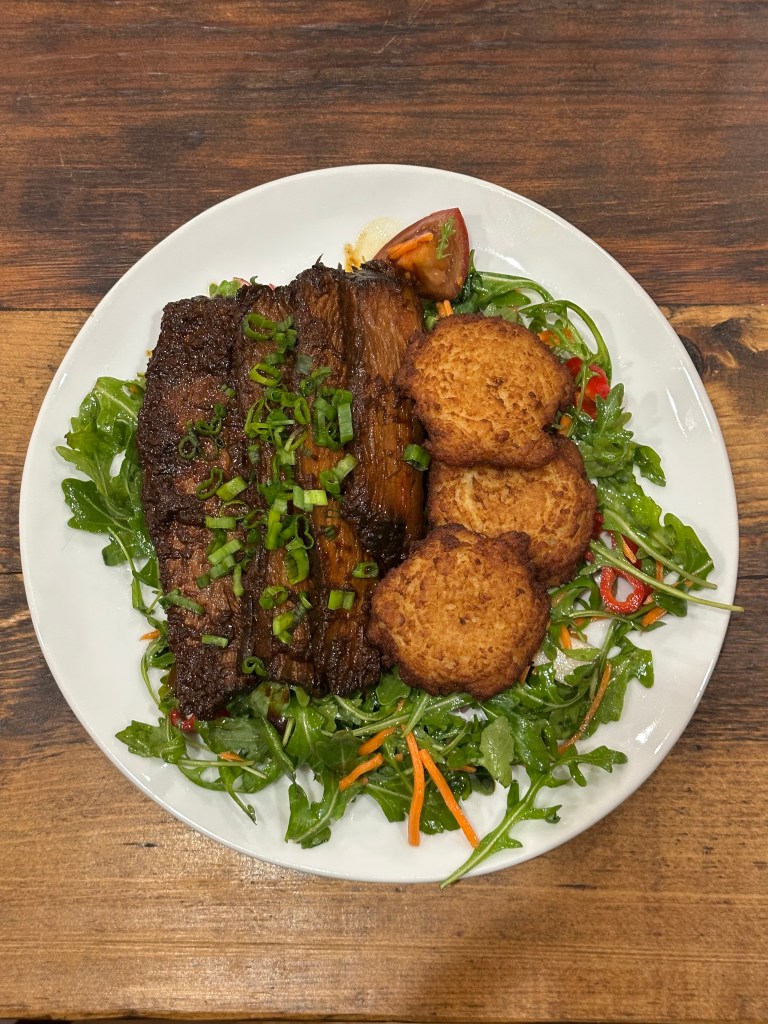
And although the brisket made it to my table that night, the next stop was the trash. I couldn’t even figure out a creative way to use what remained, and besides, no one wanted to ever see it again anyway.
Lesson learned. And that, in its own way, was worth the experiment.
 Chef Diana Andrews